
If it’s not my problem whose problem is it? An observation on American oil rhetoric. By Brian Melnyk
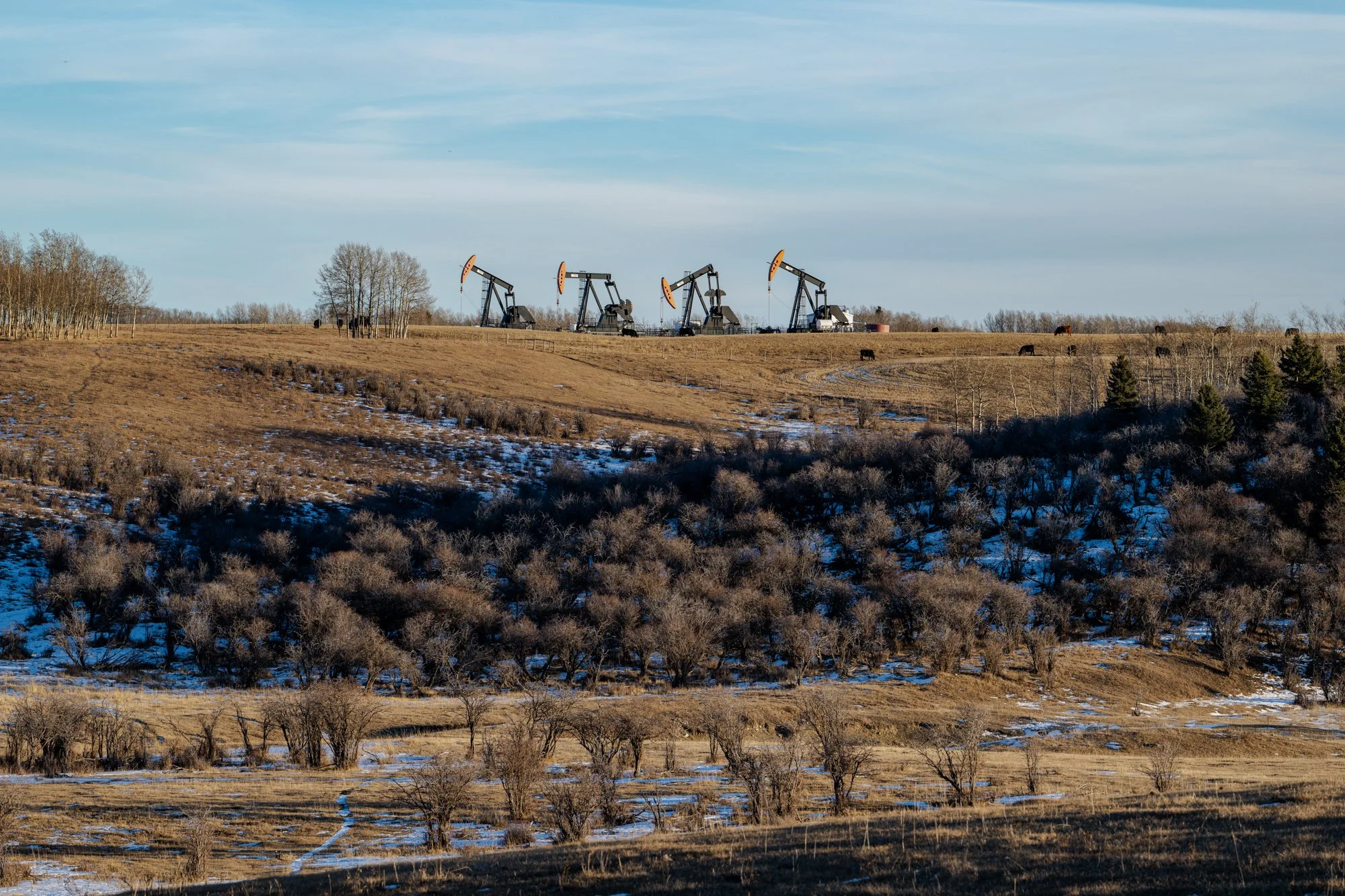
Pumps jacks west of Cochrane, AB.
Over the next five years, Joe Biden’s Infrastructure Investment and Jobs Act (IIJA) will provide $4.7 billion for an orphan well fund. The U.S. has an estimated 130,000 orphaned wells, posing environmental and safety risks to millions of Americans.
Texas, Louisiana, and Mississippi, however, are suing the U.S. Bureau of Ocean Energy Management (BOEM)because of the financial burden this law will place on smaller oil and gas producers—risking insolvency.
In an interview with Reuters, the Louisiana Attorney-General, Liz Murrill, says, “This is a really egregious assault on intermediate-level producers of oil and gas, and that affects a lot of business in our state.”
Surprisingly, a study from the National Resource Defence Council, looking at the financial liabilities and environmental implications of unplugged wells in the Gulf of Mexico, found 14,000 unplugged offshore wells, which will cost the Gulf States and producers an estimated $30 billion to remediate.
The financial implications will undoubtedly be significant, but the system is broken. U.S. taxpayers are shouldering the debt left by energy producers who make billions in profit every year.
Kevin Bruce, executive director of the Gulf Alliance, a coalition of offshore oil and gas producers, says, “[t]he new regulation is a solution in search of a problem, imposing unnecessary financial burdens that will have far-reaching impacts to many small to mid-size energy producers and all Americans.”
At what point does cleaning up after yourself become considered a standard business practice? An even deeper question of concern is whether companies should conduct high-stakes business if they cannot afford to be in business?
This isn’t to say wind and solar facilities haven’t done the same thing. There are plenty of land use problems and recycling mismanagement issues to note. However, whether it is public or private land, the system must prioritize whose responsibility it is to clean up their mess. If you dig a hole in a city street, the remediation requirement is to fill the hole and adequately reclaim the area to its original state. Municipalities demand this.
We are dealing with corporate greed and poor oversight. An imbalance of power exists because profit is always prioritized over environmental concerns. John Baldoni from the Harvard Business Review says it perfectly: “A failure to take responsibility is a failure to lead.”
When oil wells sit dormant, shut-in, in farm fields, and, in this case, dumping emissions underneath ocean platforms, they are called orphans. Poor cement jobs often leak fluids and gases into groundwater, and methane constantly leaks through old ball valves, wellheads, and quarter turns. The assets are usually orphaned because of poor production, the extraneous cost of abandonment or financial dissolution.
Many of the wells from small—to medium-sized oil companies were acquired through purchase agreements. Wells are routinely packaged up and sold to other buyers.
Imagine a drilling program is like fathering children. I drilled 14 wells in 2021, producing four outstanding performers who are A students; six are middle-of-the-road B students, and the remaining four C students have behavioural issues. Over time, each well ages and depreciates, costing more to stimulate production.
Today, I need some cash, so I decided to sell two A students and three B students and hide the high-cost behaviour challenges in the package, thereby unloading risky assets. These wells get turned over deal after deal until they become stranded in a perpetual cycle.
If you get rid of your children, in real life, you will be called out on social media and probably visited by a government organization to assess parental acuity, but in business this becomes someone else’s problem.
Resources for the Future, an independent non-profit research organization, estimates that plugging land-based wells costs an average $76,000, and the complete remediation could cost as much as $1 million, depending on the complexity. Decommissioning offshore drilling platforms is exponentially more costly because of the whip-stocked spiderweb of wells underneath a physical platform made of concrete and steel.
In a bankruptcy report, Haynes and Boone, a Dallas law firm tracking insolvencies, said between 2015 and 2021, over 500 oil and gas companies went bankrupt, involving more than $321 billion in secured and unsecured debt. In the U.S., as in Canada, the unsecured debt goes directly back to the taxpayer.
It remains unclear how the market will react or whether the new IIJA will a promote environmental stewardship—only time will tell.
Nevertheless, oil companies are orphaning wells faster than the Sunny Vale Trailer Park, and there needs to be more accountability. In all likelihood, Biden’s IIJA will put similar financial strains on small companies and entrepreneurs with limited credit and resources, as the mandatory ESG reporting rules.
Amid climate change and an energy transition, everyone wants to conduct low-cost business, but that might differ from how public policy reshapes business practices. As Peter Tertzakian says, people want their energy to be cheap, clean, safe and secure—but history says it’s hard to have all four.
Living in Alberta, it is important to take note of the rhetoric and policy south of the border to draw comparisons. Our liability in Canada is significantly less than in the U.S. However, I assume our resources and capital is also shrunken.