
MWD Tools and Coronal Ejections
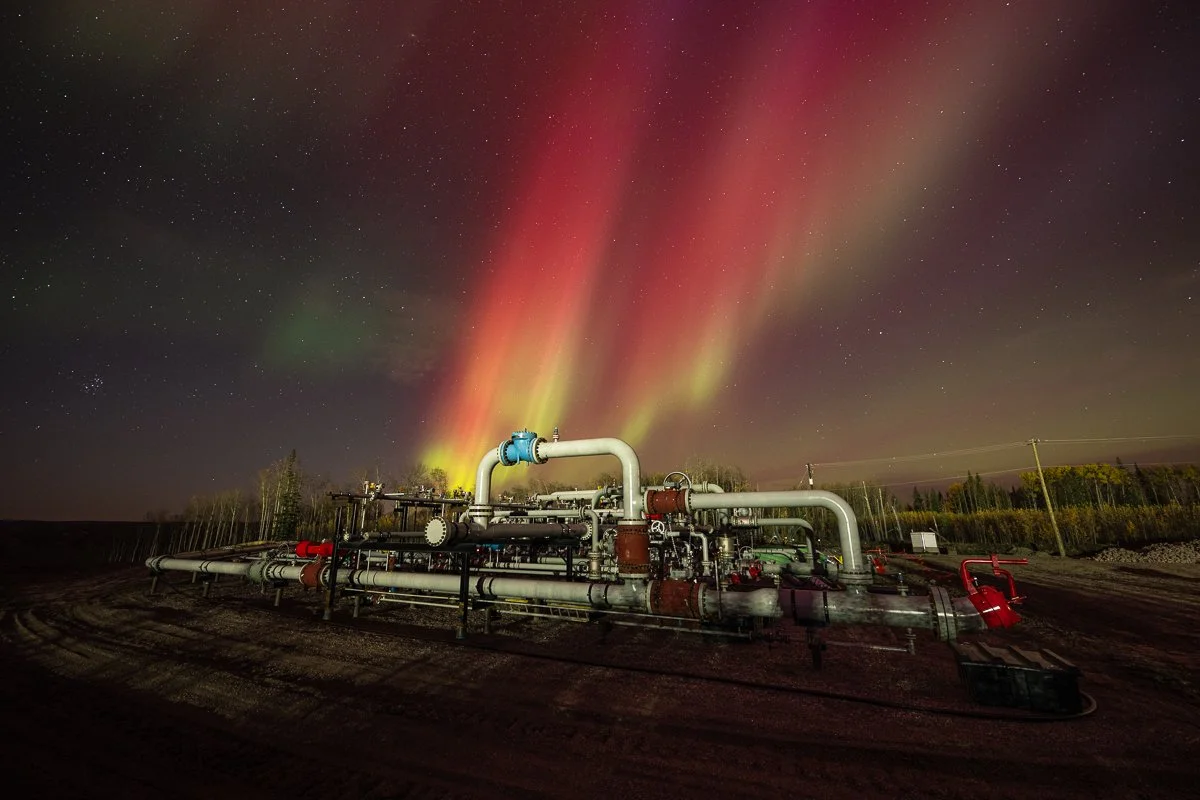
Pipeline riser feeding the Coastal GasLink Pipeline, Hudson Hope. Oct, 11/2024.
Coronal Mass Ejections
Billions of fusion reactions combine, propelling the Sun's plasma across the cosmos, creating brilliant lights that dance across the night sky.
The drilling industry relies heavily on the Earth’s magnetic field to guide drill bits carefully towards their target. In my case, we’re drilling the Montney gas formation, which is approximately 1,800 meters in total vertical depth and ranges from around 4,000 meters to as far as 8,000 meters, which is barely a pinprick in the Earth’s crust.
Drill bits reaching far into the crust—by our standards—are guided by finely tuned directional tools powered by electromagnetic sensors. On the surface, a person can guide themselves azimuthally, using a compass, where the magnetized needle reliably aligns itself horizontally with the Earth’s magnetic flux lines to point North.
However, once you drill into the earth, the four points of the compass aren’t enough for accurate plotting. The well’s path has entered a new plane requiring the use of inclination and azimuth to chart its path through a spherical object. How neat is that?
The schematic featured below shows how my computer system reads the electronic signal from the Earth. The horizontal thick blue line represents the signal coming from directional tools, and the vertical lines jutting upwards demonstrate the X-rays bombarding the Earth, thereby blotting out the tool’s signal and causing electromagnetic disruption.
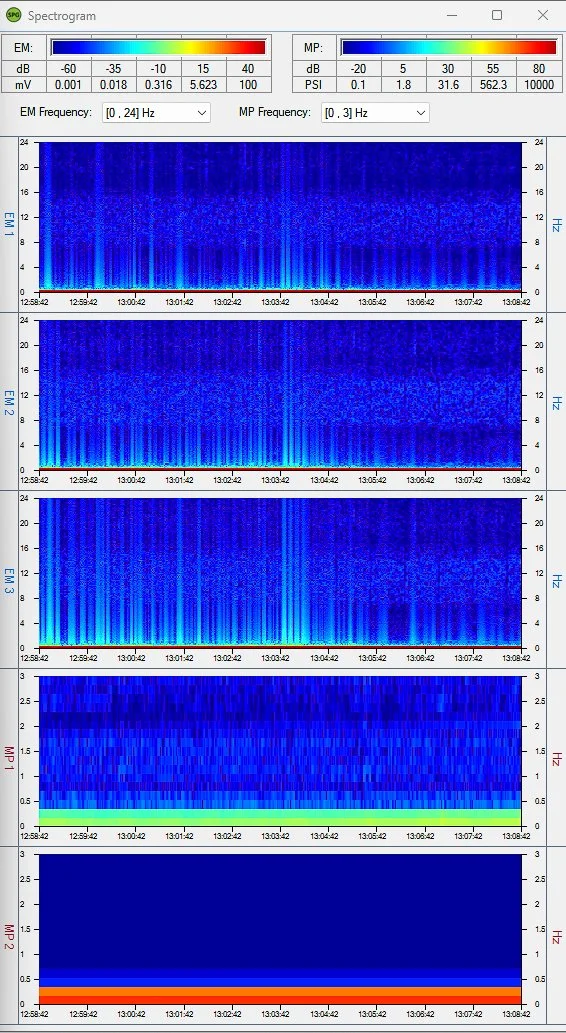
Magnetic flux lines disrupting tool transmission
Solar Maximum
As we enter July 2025, the sun is reaching its maximum output, on an 11-year cycle, with 115 sunspots, which is typically weaker than other recorded solar maximums. Nevertheless, this summer and creeping into fall should feature some amazing Northern light shows.
Let us first break down the magnetism. Magnetic fields form in concentric circles around moving charges. The Earth's iron core generates a solid dipole field, meaning the positively charged north pole and the negatively charged south pole create a magnetic field. This magnetic field radiates down through the south pole into space and then back into the north pole. Because magnetism and gravity are interconnected as building blocks of the universe, the Earth and Sun are attached in a solar system.
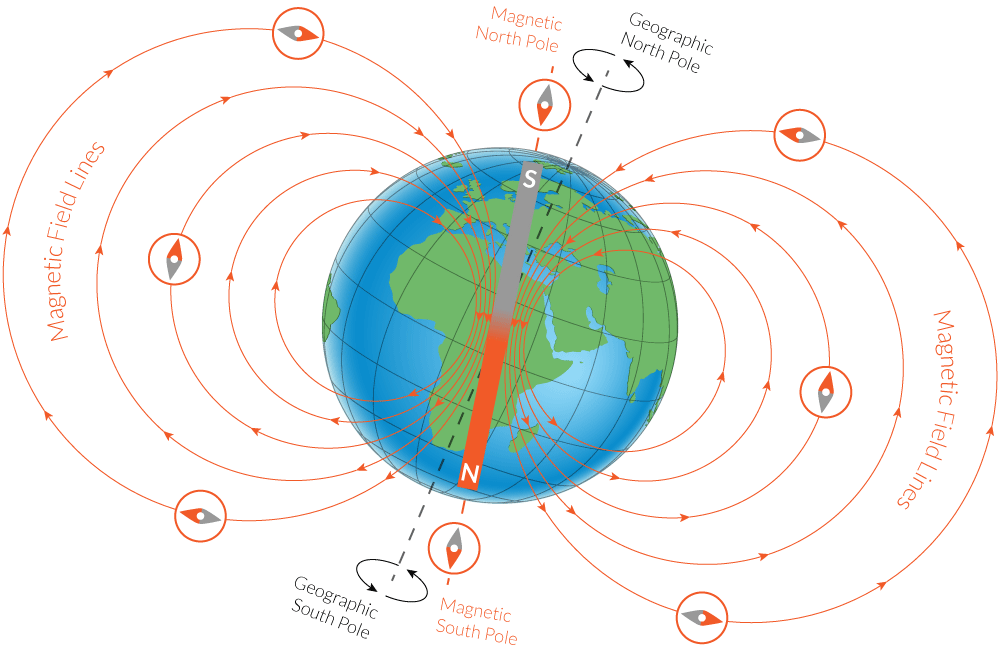
Dipole geomagnetic flux lines
The sun's magnetic sphere emanates like strands of spaghetti as charged particles spiral outward into space. At the equator, the sun rotates at speeds 11% faster than at the poles, resulting in a rapid stirring of the plasma. Sometimes the plasma-like spaghetti breaks apart from the sun, arcing into space at up to 1,000 kilometres per second.
These ejections are propelled by billions of fusion reactions, sending plasma clouds (x-rays, gamma rays, and ultraviolet radiation) barreling towards Earth, engulfing it in radiation. The x-ray and ultraviolet radiation ionize in the lower atmosphere and are illuminated by the sunny side of the planet, casting marvellous visual effects that emanate from the poles across night skies.
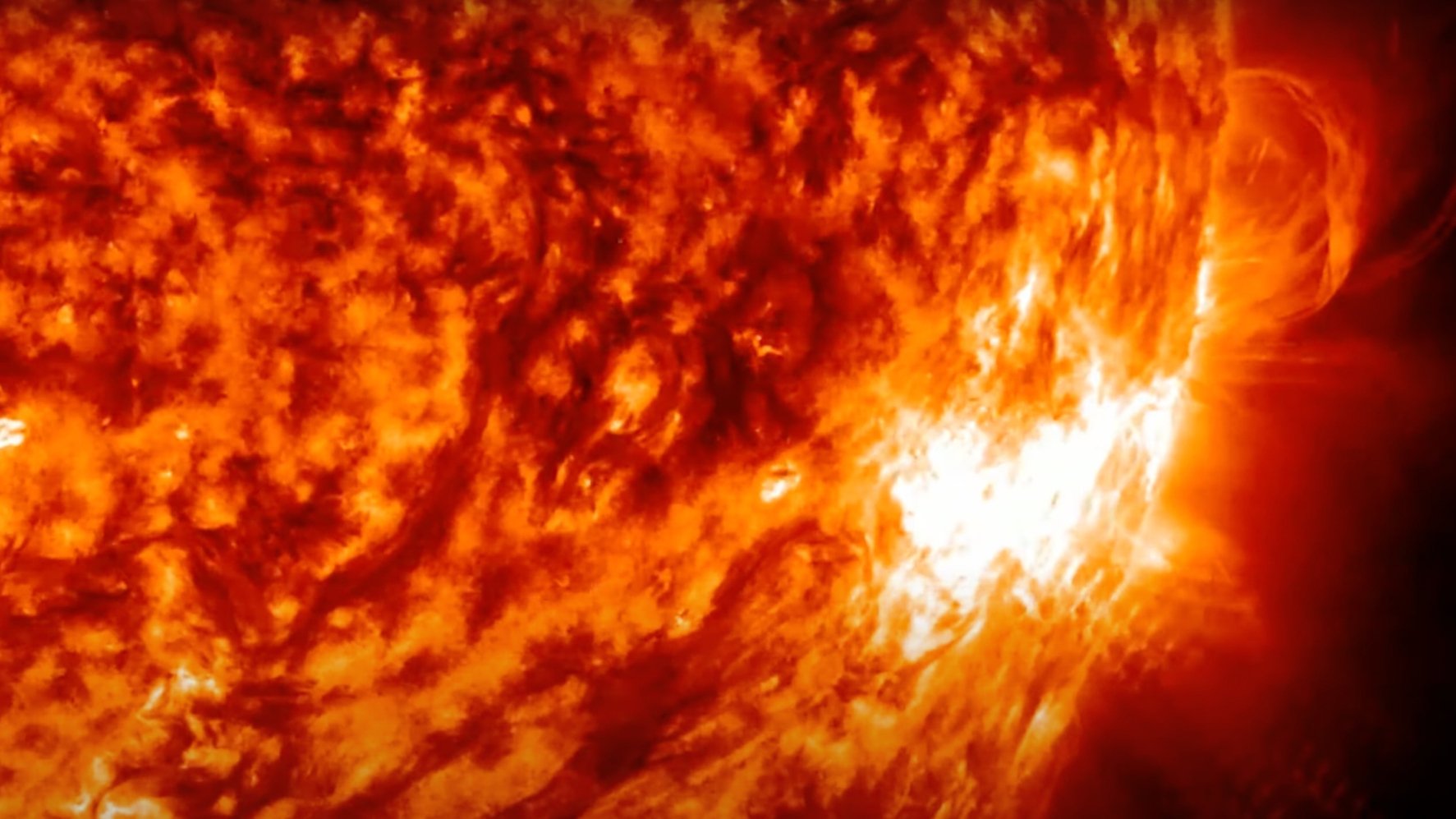
NASA's Solar Dynamics Observatory captured this view of an X2.1 solar flare erupting from the sun on Oct. 7, 2024. (Image credit: NASA/SDO and the AIA, EVE, and HMI science teams, helioviewer.org)
MWD Tool Disruption
Even though geomagnetic storms were dazzling to the eye, they created radio blackouts, where the directional data coming from the well became difficult to interpret. In directional drilling, we rely on the magnetic dip angle (the angle between the Earth's magnetic field lines and the horizontal plane at a specific location), Earth’s gravity, and magnetic field strength to determine the accuracy of our surveys.
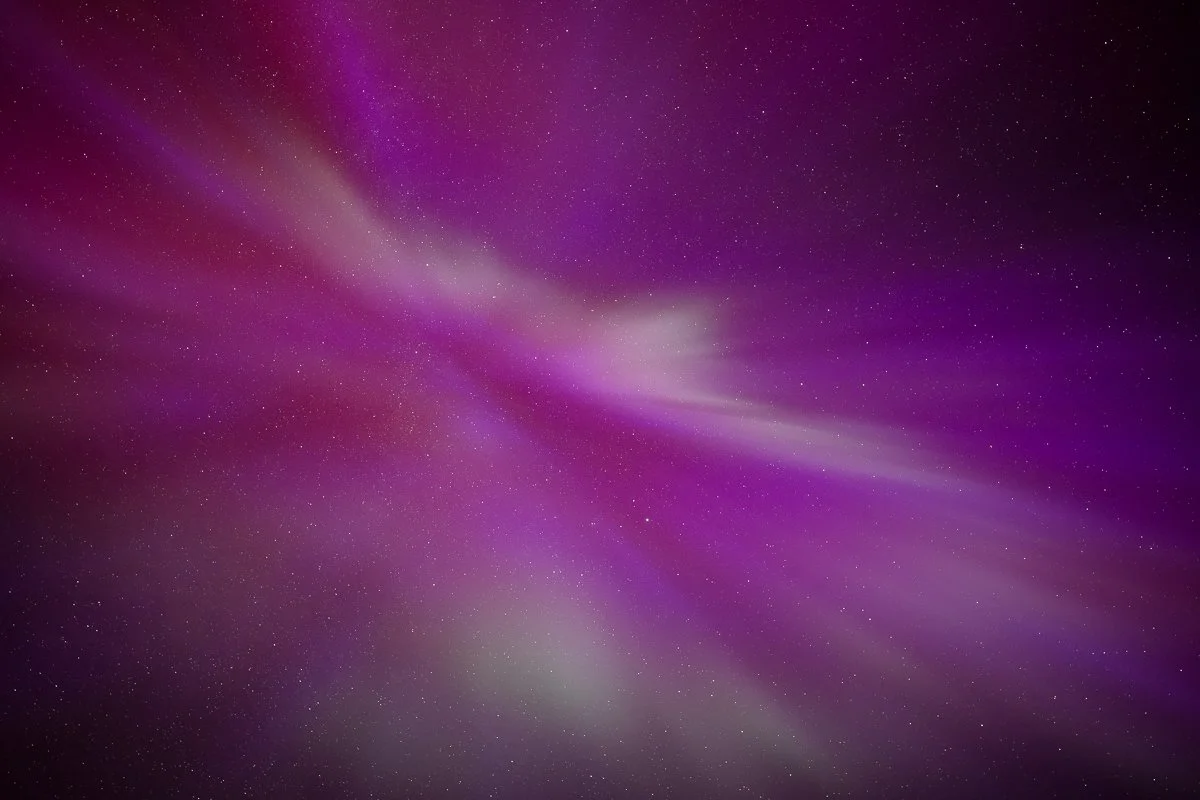
Northern Lights, Hudson’s Hope, B.C., Oct. 11/2024.
This year’s solar maximum will make the mountain-going astro photographer happy, but it will present technical challenges to drilling oil and gas wells because we rely on a stable magnetic field. As coronal mass ejections blast magnetically charged particles into space, their magnetic fields envelop the Earth, disrupting its natural dipolar flow.
Magnetic events like this one can even stop us from drilling because the values decoded from the tool are out of tolerance and unbelievable. When the Earth’s magnetic field is inundated with excess radiation, radio frequencies are disrupted, and communications blackouts may occur.
We have protocols to follow and governmental policies to abide by, so that we know exactly where we are in the hole at all times. These controls prevent us from unintentionally steering into a spider's web of wells that have been planned in the formation we’re targeting. Imagine passing a magnet over a compass; the needle’s pull toward geomagnetic north will be disrupted as the metal is pulled toward a false magnetic coordinate.
This seems unbelievable to most people onsite, but when Earth is swimming in solar radiation, I can see it on my spectrogram and also on the main qualifiers on the survey. My heart rate picks up at times like this because we’re on a schedule and time is money. The last thing I want is to provide inaccurate data or cause downtime.
The MWD tool transmits data from deep within the earth to copper rods tethered to kilometres of copper wire. I have run out in all directions from the rig to act as antennas. The antennas and MWD tool sense the increasingly disruptive magnetic field and transmit that data to a decoder, which converts the electrical signal into binary code and then passes it to surface display software, transforming the numbers into directional coordinates and the signal you see on the spectrogram. The decoder and surface display work together to filter out poor and competing signals. The technology is vastly improved from older legacy systems.
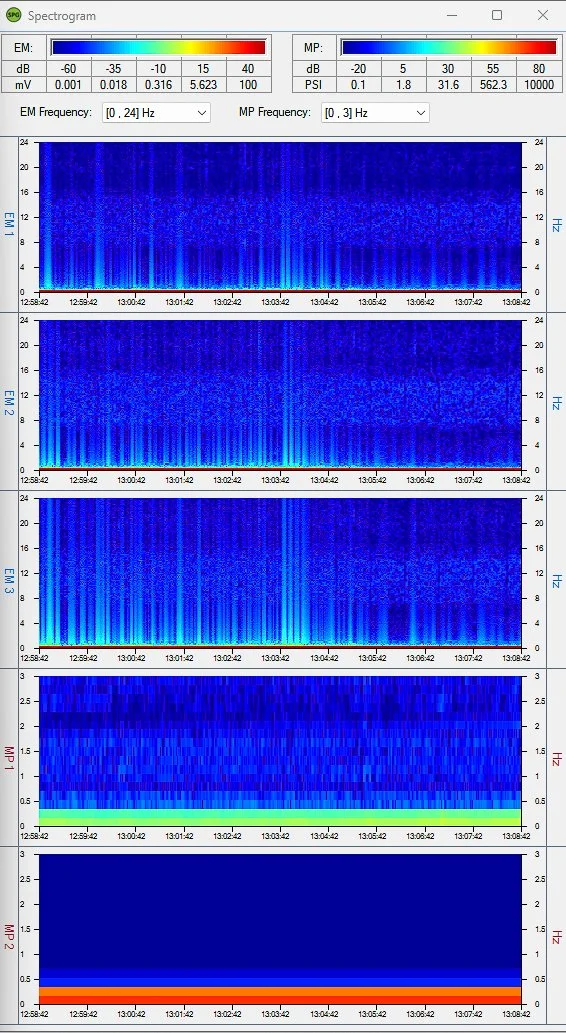
Spectrogram during a magnetic storm. Magnetic flux lines are stronger than signal.
The science is relentlessly cool and continues to keep us on our toes. So, if your local MWD operator is telling you he can’t get a good survey, try, try, and try again. We are fortunate that science continues to evolve and become more mainstream knowledge. It certainly makes my life easier when the Advanced Survey Department warns operators of solar events and analyzes survey qualifiers to keep the bit spinning on bottom. Directional drilling has advanced significantly over the past decade, especially in terms of technology and its ability to filter out electromagnetic noise, and continues to improve. Drill baby drill.